
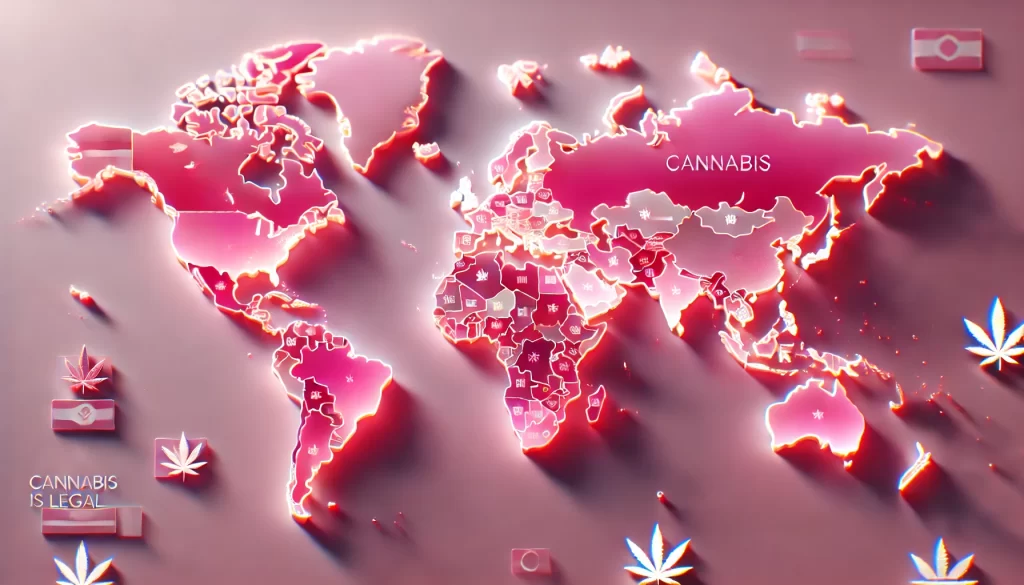
Countries Where Cannabis is Legal: Your Complete Global Guide to Marijuana Legalization
The global cannabis landscape has undergone a remarkable transformation in recent years, with an increasing number of nations either decriminalizing or fully legalizing marijuana for medical and recreational purposes. As public perception evolves and mounting scientific evidence demonstrates the therapeutic benefits of cannabis, more countries are reconsidering their stance on this once-stigmatized plant. But which nations have embraced this progressive change, and where does cannabis remain strictly prohibited?
This comprehensive guide from Yummy Buds Dispensary examines the legal status of cannabis worldwide, exploring the laws, regulations, and compelling reasons behind legalization in various countries. Whether you’re a cannabis enthusiast planning international travel, an investor seeking opportunities in the burgeoning cannabis market, or simply curious about global marijuana policies, this article provides the authoritative information you need.
Countries Where Cannabis is Legal | Weed For Sale Near Me
Understanding Cannabis Legalization: What Does It Really Mean?
Before diving into the specifics of where cannabis is legal, it’s essential to understand what legalization actually entails. Cannabis legalization refers to the process of making marijuana legal for medical use, recreational consumption, or both purposes under governmental regulation. In countries where cannabis is legal, consumers can purchase, possess, and use cannabis products without fear of criminal prosecution.
However, the scope and nature of cannabis legalization vary dramatically from one jurisdiction to another. Some nations have implemented full legalization with comprehensive regulatory frameworks, while others have only approved medical marijuana under strict conditions. Still others maintain complete prohibition with severe penalties for possession or use.
The Spectrum of Cannabis Legalization
Cannabis laws typically fall into several categories:
- Full Legalization: Both medical and recreational use are permitted with regulated sales
- Medical-Only Legalization: Cannabis is available exclusively for patients with qualifying conditions
- Decriminalization: Possession of small amounts is not criminally prosecuted but remains technically illegal
- Complete Prohibition: All forms of cannabis possession and use are strictly forbidden
Understanding these distinctions is crucial when navigating the complex global landscape of cannabis legislation. So which countries have adopted progressive cannabis policies, and which maintain stricter approaches? Let’s explore in detail.
Countries with Legal Recreational Cannabis: Leading the Global Movement
1. Canada: North America’s Cannabis Pioneer
Canada made history in October 2018 by becoming the first G7 nation and only the second country worldwide to legalize recreational cannabis for adults. Under the comprehensive Cannabis Act, individuals who have reached the legal age (18 or 19, depending on the province) can legally purchase, possess, and consume cannabis for both medical and recreational purposes.
Key Regulations in Canada:
- Adults may legally possess up to 30 grams of dried cannabis (or equivalent) in public spaces
- Cannabis can be purchased from government-licensed retail stores or authorized online retailers
- Households are permitted to cultivate up to four cannabis plants for personal use
- Each province maintains the authority to establish additional regulations regarding retail sales, consumption locations, and minimum age requirements
- Driving under the influence of cannabis carries serious legal penalties similar to alcohol impairment
Why Canada Became a Global Cannabis Leader:
Canada’s decision to legalize cannabis stemmed from multiple policy objectives. The government sought to eliminate the massive illegal cannabis market, reduce organized crime involvement in cannabis distribution, protect youth by implementing age restrictions and quality controls, and generate substantial tax revenue for public services. Since legalization, Canada has established itself as a model for other nations considering similar reforms, demonstrating that regulated cannabis markets can function effectively within a comprehensive legal framework.
The Canadian Cannabis Market Today:
The Canadian cannabis industry has evolved into a multi-billion-dollar sector, with Yummy Buds Dispensary and countless other retailers serving millions of consumers nationwide. The market continues to mature with innovations in product development, consumption methods, and retail experiences.
2. Uruguay: The World’s First Country to Fully Legalize Cannabis
Uruguay earned its place in history books in December 2013 by becoming the first nation globally to completely legalize recreational cannabis. Under Uruguay’s groundbreaking Cannabis Law, residents are permitted to purchase cannabis from government-registered pharmacies, cultivate plants at home, or join cannabis social clubs for collective cultivation. While recreational use is legal, only Uruguayan citizens and permanent residents can legally purchase cannabis through official channels.
Key Regulations in Uruguay:
- Adults may purchase up to 40 grams of cannabis per month from licensed pharmacies
- The government maintains strict control over cannabis production, distribution, and pricing
- Home cultivation of up to six cannabis plants per household is permitted
- Cannabis social clubs can have between 15 and 45 members and cultivate up to 99 plants collectively
- All cannabis users must register with a government database (a controversial requirement that has limited participation)
- Public consumption is prohibited in most areas
Uruguay’s Motivation for Cannabis Legalization:
Uruguay’s progressive approach to cannabis legalization was primarily driven by public safety concerns. The government aimed to dismantle the illegal drug trade, reduce violence associated with drug cartels, and protect consumers from dangerous, unregulated products. By bringing cannabis under government control, Uruguay sought to create a safer, more transparent market while collecting tax revenue and reducing the burden on the criminal justice system.
Challenges and Successes:
While Uruguay’s cannabis experiment has been largely successful in reducing illegal market activity, the program has faced challenges, including limited pharmacy participation, supply shortages, and concerns about the mandatory user registry. Nevertheless, Uruguay’s pioneering approach has provided valuable lessons for other nations considering legalization.
3. The Netherlands: Famous for Cannabis Coffeeshops
The Netherlands occupies a unique position in global cannabis policy. While cannabis remains technically illegal under Dutch law, the country has implemented a pragmatic “tolerance policy” (gedoogbeleid) that permits licensed coffeeshops to sell small quantities of cannabis products. This approach has made Amsterdam and other Dutch cities famous destinations for cannabis tourism.
Key Regulations in The Netherlands:
- Licensed coffeeshops may sell up to 5 grams of cannabis per transaction to adults 18 and older
- Coffeeshops cannot advertise, must maintain distance from schools, and cannot cause public nuisance
- Personal possession of up to 5 grams is tolerated (not prosecuted)
- Home cultivation of up to five plants for personal use is generally tolerated
- The “back door problem” persists: while coffeeshops can legally sell cannabis, supplying these establishments remains technically illegal
- Public consumption is discouraged but generally tolerated in designated areas
The Dutch Approach to Cannabis Policy:
The Netherlands has maintained a liberal stance toward cannabis for decades, classifying it as a “soft drug” distinct from more dangerous substances. This harm reduction approach aims to separate the cannabis market from harder drugs, reduce criminal justice costs, and protect public health. The Dutch model has influenced cannabis policy discussions worldwide, though it remains controversial even within the Netherlands.
Recent Developments:
The Netherlands is currently experimenting with regulated cannabis cultivation programs in select cities to address the “back door problem” and further legitimize the cannabis supply chain. Yummy Buds Dispensary watches these developments closely as they may influence future international cannabis policies.
Countries with Legal Medical Cannabis: Therapeutic Applications
1. Germany: Europe’s Medical Cannabis Powerhouse
Germany legalized medical cannabis in March 2017, quickly establishing itself as one of Europe’s largest and most sophisticated medical marijuana markets. Patients suffering from serious conditions can access cannabis through prescriptions from licensed physicians, with many insurance companies covering the costs.
Key Regulations in Germany:
- Medical cannabis is available exclusively through prescription from qualified healthcare providers
- Patients can access various cannabis products, including dried flowers, extracts, oils, and pharmaceutical preparations
- Qualifying conditions include chronic pain, multiple sclerosis, cancer-related symptoms, epilepsy, and other serious illnesses
- Many statutory health insurance providers cover medical cannabis costs when conventional treatments have failed
- Pharmacies must meet strict quality and security standards to dispense medical cannabis
- Germany has developed a domestic cannabis cultivation program to ensure supply security
Why Germany Legalized Medical Cannabis:
Germany’s decision to legalize medical marijuana followed extensive research demonstrating cannabis’s therapeutic potential for various conditions. The country recognized that patients with chronic illnesses deserved access to all potentially beneficial treatments, including cannabis-based medicines. Germany’s evidence-based approach has made it a leader in medical cannabis research and patient access within Europe.
The German Medical Cannabis Market:
Germany’s medical cannabis program has grown exponentially since 2017, with tens of thousands of patients now accessing cannabis treatments. The market continues to expand as more physicians become comfortable prescribing cannabis and more research validates its therapeutic applications.
2. Australia: A Rapidly Developing Medical Cannabis Market
Australia has made significant progress in medical cannabis legalization since 2016. The Therapeutic Goods Administration (TGA) oversees the Medicinal Cannabis Scheme, which enables patients with qualifying conditions to access cannabis products through the Special Access Scheme or Authorized Prescriber pathways.
Key Regulations in Australia:
- Medical cannabis is available only through prescription from authorized healthcare practitioners
- Qualifying conditions include chronic pain, epilepsy, chemotherapy-induced nausea, multiple sclerosis, and other serious illnesses
- Patients must obtain approval through the TGA’s Special Access Scheme (SAS) or see an Authorized Prescriber
- Only cannabis products from licensed manufacturers meeting strict quality standards are permitted
- Personal cultivation for medical purposes remains prohibited
- Each state and territory may have additional regulations governing medical cannabis access
Australia’s Path to Medical Cannabis Legalization:
Australia legalized medical cannabis after recognizing the growing body of scientific evidence supporting its therapeutic benefits. The government sought to provide patients with safe, regulated access to cannabis medicines while maintaining strict quality controls and preventing diversion to recreational use. Australia’s cautious, evidence-based approach has created a robust medical cannabis framework.
Growth and Innovation:
Australia’s medical cannabis industry has experienced remarkable growth, with numerous domestic cultivation facilities and pharmaceutical companies developing innovative cannabis-based medicines. The country has also become a significant exporter of medical cannabis to international markets.
3. Israel: A Global Pioneer in Medical Cannabis Research
Israel stands as one of the world’s foremost leaders in medical cannabis research and patient access. The country legalized medical cannabis in 1992 and has continuously expanded its program, now serving tens of thousands of patients with various conditions.
Key Regulations in Israel:
- Medical cannabis is available for conditions including cancer, chronic pain, PTSD, Crohn’s disease, epilepsy, and numerous other qualifying illnesses
- Patients must obtain approval from licensed physicians specializing in medical cannabis
- The Israeli Medical Cannabis Agency (IMCA) oversees cultivation, distribution, and patient access
- Select patients may receive permission for home cultivation under special circumstances
- Israel has developed sophisticated cannabis research programs at leading universities and medical centers
- The country has pioneered various cannabis delivery methods and pharmaceutical preparations
Why Israel Leads in Medical Cannabis:
Israel’s prominence in medical cannabis stems from decades of groundbreaking research, including the pioneering work of Dr. Raphael Mechoulam, who first isolated THC and discovered the endocannabinoid system. The country’s emphasis on scientific research, combined with progressive medical policies, has created an environment where medical cannabis can flourish. Israeli researchers continue to make significant contributions to understanding cannabis’s therapeutic mechanisms and applications.
Israel’s Cannabis Innovation:
Beyond patient access, Israel has become a global hub for cannabis technology, cultivation techniques, and pharmaceutical development. Many international cannabis companies collaborate with Israeli researchers and companies to advance medical cannabis science.
4. United Kingdom: Medical Cannabis with Strict Limitations
The United Kingdom legalized medical cannabis in November 2018 following high-profile cases of children with severe epilepsy who benefited from cannabis treatments. However, access remains extremely limited compared to other countries with medical cannabis programs.
Key Regulations in the UK:
- Medical cannabis is available only through prescription from specialist physicians (not general practitioners)
- Qualifying conditions are narrowly defined, primarily including severe epilepsy, chemotherapy-induced nausea, and multiple sclerosis spasticity
- Very few patients have successfully obtained NHS prescriptions due to restrictive guidelines
- Private prescriptions are available but expensive, limiting access for many patients
- Only specific cannabis-based medicines meeting pharmaceutical standards are permitted
- Recreational cannabis remains strictly illegal with criminal penalties
Challenges in UK Medical Cannabis Access:
Despite legalization, the UK’s medical cannabis program has faced significant criticism for extremely limited patient access. Many patients who could benefit from cannabis treatments cannot obtain prescriptions through the NHS, forcing them to seek expensive private care or continue using illegal cannabis. Advocacy groups continue pushing for expanded access and clearer prescribing guidelines.
5. Thailand: Asia’s Medical Cannabis Trailblazer
Thailand made headlines in 2018 by becoming the first Southeast Asian nation to legalize medical cannabis, marking a dramatic shift in regional drug policy. The country has since expanded its program and even decriminalized cannabis possession in 2022, though regulations remain in flux.
Key Regulations in Thailand:
- Medical cannabis is available for patients with qualifying conditions through licensed healthcare providers
- Thailand has developed a domestic cannabis cultivation program emphasizing traditional Thai cannabis strains
- The government initially promoted cannabis for medical tourism, but has since implemented more restrictive policies
- Regulations regarding recreational use remain unclear and subject to change
- Cannabis-infused foods and beverages have become popular, though regulatory oversight is evolving
Thailand’s Cannabis Journey:
Thailand’s approach to cannabis has been characterized by rapid policy changes and ongoing regulatory development. While the country initially embraced cannabis liberalization enthusiastically, concerns about public health and social impacts have led to more cautious policies. Yummy Buds Dispensary continues monitoring Thailand’s evolving cannabis landscape as it may influence broader Asian cannabis policies.
Countries with Both Medical and Recreational Cannabis: Comprehensive Legalization
1. United States: A Complex Patchwork of Cannabis Laws
The United States presents one of the world’s most complicated cannabis legal landscapes. While cannabis remains illegal under federal law (classified as a Schedule I controlled substance), individual states have implemented their own cannabis policies. Currently, 24 states plus Washington D.C. have legalized recreational cannabis, while 38 states permit medical marijuana.
Notable States Where Cannabis is Legal:
California: The Golden State legalized medical cannabis in 1996 (Proposition 215) and recreational use in 2016 (Proposition 64). California boasts the world’s largest legal cannabis market, with Yummy Buds Dispensary and thousands of other licensed retailers serving millions of consumers.
Colorado: One of the first states to legalize recreational cannabis in 2012 (Amendment 64), Colorado has developed a mature, well-regulated cannabis industry that serves as a model for other jurisdictions.
New York: The Empire State legalized recreational cannabis in 2021 (Marijuana Regulation and Taxation Act), with retail sales beginning in 2022. New York’s program emphasizes social equity and supporting communities disproportionately affected by cannabis prohibition.
Washington Legalized recreational cannabis simultaneously with Colorado in 2012, Washington has created a robust regulatory framework and generated hundreds of millions in tax revenue.
Oregon: Known for its progressive cannabis policies, Oregon legalized recreational use in 2014 and has developed a thriving cannabis industry with diverse product offerings.
Michigan: The Midwest’s first recreational cannabis state (legalized 2018), Michigan has experienced rapid market growth and strong consumer demand.
Massachusetts: Legalized recreational cannabis in 2016, with sales beginning in 2018. Massachusetts has implemented strict regulatory oversight while allowing a competitive market to develop.
Illinois: Legalized recreational cannabis in 2020 with a strong emphasis on social equity, expungement of prior cannabis convictions, and community reinvestment.
Key Regulations in Legal U.S. States:
- The legal age for purchasing recreational cannabis is 21 in all states with adult-use programs
- State cannabis regulatory agencies oversee licensing, testing, taxation, and compliance
- Purchase limits typically range from 1 to 2.5 ounces of flower (or equivalent) per transaction
- Home cultivation is permitted in some states (usually 6-12 plants) but prohibited in others
- Consumption is generally restricted to private property, with public use remaining illegal
- Driving under the influence of cannabis carries serious legal penalties
- Interstate cannabis commerce remains illegal due to federal prohibition
- Medical cannabis programs typically allow higher possession limits and may have lower age requirements
Why U.S. Cannabis Laws Vary by State:
The United States’ federal system grants individual states significant autonomy in establishing their own laws, provided they don’t conflict with federal statutes. While cannabis remains federally illegal, the federal government has generally adopted a hands-off approach to state-legal cannabis programs (though this policy could change with different administrations). This has created a patchwork of cannabis laws where the substance is fully legal in some states, available only for medical use in others, and completely prohibited in still others.
The Push for Federal Cannabis Reform:
Momentum continues building for federal cannabis reform in the United States. Proposed legislation, including the MORE Act (Marijuana Opportunity Reinvestment and Expungement Act) and various other bills, seeks to deschedule cannabis, expunge prior convictions, and create a federal regulatory framework. Many experts predict federal legalization or significant reform within the next several years, which would dramatically transform the U.S. cannabis landscape.
The U.S. Cannabis Industry:
Despite federal prohibition, the U.S. cannabis industry has grown into a multi-billion-dollar sector employing hundreds of thousands of people. From cultivation and manufacturing to retail operations like Yummy Buds Dispensary, the industry continues expanding rapidly as more states legalize and consumer acceptance grows.
2. Mexico: Cannabis Reform in Progress
Mexico’s Supreme Court declared cannabis prohibition unconstitutional in 2018, setting the stage for comprehensive legalization. While the legislative process has been slower than anticipated, Mexico has made significant progress toward creating a legal cannabis framework.
Current Status in Mexico:
- Personal cannabis use and possession of small amounts have been effectively decriminalized following Supreme Court rulings
- Medical cannabis is legal with proper authorization from healthcare providers
- Comprehensive recreational legalization legislation has been debated but not yet fully implemented
- The regulatory framework for commercial cannabis sales is still under development
- Home cultivation for personal use is permitted following court decisions
Why Mexico’s Cannabis Legalization Matters:
As the United States’ southern neighbor and a country significantly impacted by drug cartel violence, Mexico’s cannabis legalization could have profound implications for regional drug policy and public safety. Proponents argue that legalization will reduce cartel profits, decrease violence, and create legitimate economic opportunities. Mexico’s large population and proximity to the U.S. market make it a potentially significant player in the global cannabis industry.
Challenges and Opportunities:
Mexico faces unique challenges in implementing cannabis legalization, including concerns about cartel involvement in the legal market, regulatory capacity, and public health infrastructure. However, the country also has tremendous opportunities to develop a robust domestic cannabis industry and potentially become a major exporter to international markets.
3. Luxembourg: Europe’s Next Recreational Cannabis Market
Luxembourg is poised to become the first European Union country to fully legalize recreational cannabis production and sales. The small nation has announced plans for comprehensive legalization, though implementation has been delayed.
Luxembourg’s Planned Cannabis Framework:
- Adults will be permitted to purchase cannabis from licensed retailers
- Home cultivation of limited plants for personal use will be allowed
- The government plans to establish a regulated production and distribution system
- Cannabis social clubs may be permitted under specific conditions
- Strict regulations will govern advertising, packaging, and product safety
Why Luxembourg is Pursuing Cannabis Legalization:
Luxembourg’s government views cannabis legalization as a pragmatic approach to drug policy that prioritizes public health, reduces criminal justice costs, and eliminates the illegal market. As a small, progressive nation, Luxembourg hopes to demonstrate that comprehensive cannabis legalization can work within the European Union’s legal framework.
Additional Countries with Progressive Cannabis Policies
Malta: Europe’s First Recreational Cannabis Country
Malta made history in December 2021 by becoming the first European Union nation to legalize recreational cannabis for adults. While the program is more limited than those in Canada or U.S. states, it represents a significant milestone for European cannabis policy.
Key Regulations in Malta:
- Adults 18 and older may possess up to 7 grams of cannabis
- Home cultivation of up to four plants per household is permitted
- Cannabis social clubs (non-profit organizations) can cultivate and distribute cannabis to members
- Public consumption remains prohibited with fines for violations
- Commercial cannabis sales are not permitted under the current framework
Malta’s Approach:
Malta’s cannabis legalization emphasizes personal use and social clubs rather than commercial retail. This model aims to provide legal access while avoiding some concerns associated with commercialized cannabis markets.
Switzerland: Cannabis Pilot Programs
Switzerland has launched several pilot programs allowing regulated cannabis sales in select cities, representing a cautious approach to potential broader legalization.
Key Features of Swiss Cannabis Programs:
- Pilot programs in cities including Zurich, Basel, and Geneva allow participating residents to purchase cannabis from licensed retailers
- Programs are designed to gather data on regulated cannabis markets
- Participants must be existing cannabis users and residents of participating cities
- The programs operate under scientific oversight to evaluate impacts
- Results may inform future national cannabis policy
Czech Republic: Liberal Decriminalization
The Czech Republic has maintained one of Europe’s most liberal approaches to cannabis, with decriminalization of possession for personal use and a well-established medical cannabis program.
Key Regulations in the Czech Republic:
- Possession of small amounts of cannabis (up to 10 grams or cultivation of up to 5 plants) is decriminalized
- Medical cannabis has been legal since 2013 for patients with qualifying conditions
- Cannabis social clubs operate in a legal gray area
- Full recreational legalization is under discussion
Colombia: Medical Cannabis and Decriminalization
Colombia has emerged as a significant player in the medical cannabis industry while maintaining the decriminalization of personal use.
Key Regulations in Colombia:
- Medical cannabis is legal with a well-developed regulatory framework
- Personal possession of up to 22 grams is decriminalized
- Colombia has become a major exporter of medical cannabis to international markets
- The country’s ideal growing conditions and lower production costs make it competitive globally
Argentina: Medical Cannabis and Decriminalization
Argentina legalized medical cannabis in 2017 and has decriminalized personal possession and cultivation.
Key Regulations in Argentina:
- Medical cannabis is available for patients with qualifying conditions
- Personal possession of small amounts is decriminalized
- Home cultivation for personal use is permitted
- The government has established a national medical cannabis program
Jamaica: Cannabis Culture and Tourism
Jamaica, famous for its cannabis culture and association with Rastafarian traditions, has legalized medical cannabis and decriminalized small amounts for personal use.
Key Regulations in Jamaica:
- Medical cannabis is legal and available through licensed dispensaries
- Possession of up to 2 ounces is decriminalized (subject to fines rather than criminal prosecution)
- Home cultivation of up to five plants is permitted
- Cannabis tourism has developed with licensed dispensaries serving visitors
- Rastafarian sacramental use is legally protected
Jamaica’s Cannabis Industry:
Jamaica has developed a growing cannabis tourism industry, with visitors able to purchase cannabis from licensed dispensaries. The country’s rich cannabis culture and beautiful setting make it an attractive destination for cannabis enthusiasts. However, the industry faces challenges, including limited banking access and competition from larger markets.
South Africa: Constitutional Right to Cannabis
South Africa made international headlines in 2018 when its Constitutional Court ruled that cannabis prohibition violated citizens’ right to privacy, effectively legalizing personal use and cultivation.
Key Regulations in South Africa:
- Adults may use and cultivate cannabis in private spaces
- Public consumption remains illegal
- Commercial sales are not yet fully legalized, though regulations are under development
- Medical cannabis is legal with proper authorization
- The ruling applies only to personal use, not commercial activity
South Africa’s Cannabis Future:
South Africa is working to develop a comprehensive regulatory framework for commercial cannabis, including cultivation, manufacturing, and retail sales. The country has significant potential to become a major player in the African and global cannabis markets, with ideal growing conditions and increasing investment in the sector.
Portugal: Decriminalization Pioneer
Portugal famously decriminalized all drugs, including cannabis, in 2001 as part of a comprehensive drug policy reform focused on public health rather than criminal justice.
Key Regulations in Portugal:
- Possession of small amounts of cannabis (up to 25 grams) is decriminalized
- Individuals found with cannabis may face administrative penalties or be referred to treatment
- Cannabis sales remain illegal
- Medical cannabis was legalized in 2018 for specific conditions
- The approach emphasizes harm reduction and treatment over punishment
Portugal’s Drug Policy Success:
Portugal’s decriminalization approach has been widely studied and praised for reducing drug-related deaths, HIV infections, and criminal justice costs while not increasing overall drug use. The Portuguese model has influenced drug policy discussions worldwide and demonstrates that decriminalization can be implemented successfully.
Spain: Cannabis Social Clubs
Spain occupies a unique position in European cannabis policy through its cannabis social club model, which operates in a legal gray area.
Key Regulations in Spain:
- Personal cannabis use and cultivation in private spaces are legal
- Cannabis social clubs (non-profit associations) can collectively cultivate and distribute cannabis to members
- Clubs must be private, non-profit, and not advertise publicly
- Commercial cannabis sales remain illegal
- Regulations vary by region, with some areas more tolerant than others
The Spanish Cannabis Social Club Model:
Spain’s cannabis social clubs have become popular among residents and tourists, offering a legal way to access cannabis in a social setting. However, the model exists in legal ambiguity, with ongoing debates about regulation and concerns about clubs that operate more like commercial businesses than true member associations.
New Zealand: Medical Cannabis with Recreational Referendum
New Zealand legalized medical cannabis in 2020 and held a referendum on recreational legalization the same year, which narrowly failed.
Key Regulations in New Zealand:
- Medical cannabis is available for patients with qualifying conditions
- Doctors can prescribe cannabis-based medicines
- Recreational cannabis remains illegal following the failed 2020 referendum
- Possession of small amounts may result in warnings rather than prosecution in some cases
New Zealand’s Cannabis Debate:
The narrow failure of New Zealand’s recreational cannabis referendum (50.7% against, 48.4% in favor) demonstrates the country’s divided opinion on legalization. Advocates continue pushing for reform, and another referendum may occur in the future.
Lebanon: Economic Necessity Drives Legalization
Lebanon legalized cannabis cultivation for medical and industrial purposes in 2020, driven largely by economic necessity during a severe financial crisis.
Key Regulations in Lebanon:
- Cannabis cultivation for medical and industrial purposes is legal with proper licensing
- The Bekaa Valley, historically known for cannabis cultivation, is now home to legal operations
- Recreational use remains illegal
- The program aims to generate export revenue and create legal employment
Morocco: Africa’s Largest Cannabis Producer
Morocco, one of the world’s largest cannabis producers (primarily for the illegal market), legalized cannabis for medical and industrial purposes in 2021.
Key Regulations in Morocco:
- Cannabis cultivation for medical and industrial purposes is legal with government authorization
- The program focuses on the northern Rif region, where cannabis has been cultivated for generations
- Recreational use remains illegal
- The government aims to transition illegal cultivation to the legal market
Countries Where Cannabis Remains Strictly Prohibited
Despite the global trend toward cannabis legalization and decriminalization, many countries maintain strict prohibition with severe penalties for possession, use, or trafficking.
Singapore: Zero-Tolerance Drug Policy
Singapore maintains one of the world’s strictest drug policies, with severe penalties for cannabis offenses.
Cannabis Laws in Singapore:
- Possession of any amount of cannabis is illegal and can result in imprisonment
- Trafficking offenses (possession of more than 500 grams) carry the mandatory death penalty
- Even cannabis use outside Singapore can result in prosecution upon return
- The government maintains a strict zero-tolerance approach to all drugs
- No medical cannabis exceptions exist
Singapore’s Rationale:
Singapore’s government argues that strict drug laws are necessary to maintain public safety and social order. The country points to low drug use rates as evidence of policy success, though critics argue the approach is disproportionately harsh and violates human rights.
United Arab Emirates: Severe Penalties for Cannabis
The UAE, including Dubai and Abu Dhabi, maintains extremely strict cannabis laws with severe penalties.
Cannabis Laws in the UAE:
- Possession of any amount of cannabis can result in imprisonment (minimum 4 years)
- Trafficking offenses carry lengthy prison sentences or the death penalty
- Even trace amounts of cannabis (including in the bloodstream) can result in prosecution
- No medical cannabis exceptions exist
- Foreign visitors are subject to the same laws as residents
Saudi Arabia: Capital Punishment for Drug Offenses
Saudi Arabia enforces some of the world’s harshest drug laws, including capital punishment for serious offenses.
Cannabis Laws in Saudi Arabia:
- Possession and use of cannabis are strictly prohibited
- Drug trafficking offenses can result in the death penalty
- No medical cannabis exceptions exist
- Religious and cultural factors strongly influence drug policy
- Foreign nationals are subject to the same laws as citizens
Japan: Cultural Opposition to Cannabis
Japan maintains a strict cannabis prohibition rooted in cultural attitudes and post-World War II drug policy.
Cannabis Laws in Japan:
- Cannabis possession is illegal, with penalties including imprisonment up to 5 years
- Cultivation carries even harsher penalties (up to 7 years imprisonment)
- No medical cannabis exceptions exist (though some CBD products are permitted)
- Cultural stigma against cannabis use is strong
- Even foreign residents and visitors are subject to strict enforcement
Japan’s Cannabis Debate:
Despite strict prohibition, some Japanese advocates are pushing for medical cannabis legalization, particularly for patients with serious conditions. However, cultural attitudes and conservative drug policies make significant reform unlikely in the near term.
South Korea: Extraterritorial Drug Laws
South Korea maintains a strict cannabis prohibition and uniquely prosecutes its citizens for cannabis use even when it occurs legally in other countries.
Cannabis Laws in South Korea:
- Cannabis possession and use are illegal with criminal penalties
- South Korean citizens can be prosecuted for using cannabis legally in other countries upon return
- Medical cannabis was legalized in 2019 for very limited conditions, but access remains extremely restricted
- Cultural stigma against drug use is strong
China: Strict Prohibition Despite Hemp Industry
China maintains strict cannabis prohibition for recreational and most medical purposes, despite being the world’s largest hemp producer.
Cannabis Laws in China:
- Cannabis possession and use are illegal with criminal penalties
- Drug trafficking offenses can result in the death penalty
- Industrial hemp cultivation is legal and widespread
- Some CBD products are permitted for export but not domestic consumption
- No medical cannabis program exists
Russia: Harsh Penalties and No Medical Access
Russia enforces strict cannabis prohibition with no medical cannabis exceptions.
Cannabis Laws in Russia:
- Possession of even small amounts can result in criminal charges
- Larger amounts carry significant prison sentences
- No medical cannabis program exists
- Cultural and political factors strongly oppose cannabis reform
Indonesia: Death Penalty for Drug Offenses
Indonesia maintains extremely harsh drug laws, including the death penalty for trafficking offenses.
Cannabis Laws in Indonesia:
- Cannabis possession is illegal, with prison sentences
- Trafficking offenses can result in the death penalty
- No medical cannabis exceptions exist
- Foreign nationals have been executed for drug offenses
- Bali and other tourist destinations strictly enforce drug laws despite their popularity with international visitors
Philippines: Controversial Drug War
The Philippines has conducted a controversial “war on drugs” with extrajudicial killings and harsh enforcement.
Cannabis Laws in the Philippines:
- Cannabis possession and use are illegal with criminal penalties
- Drug offenses can result in lengthy prison sentences
- Medical cannabis legislation has been proposed but not implemented
- Enforcement has been extremely harsh and controversial
The Future of Global Cannabis Legalization
The global cannabis landscape continues evolving rapidly, with several clear trends emerging:
Increasing Medical Cannabis Acceptance
Medical cannabis legalization is becoming increasingly accepted worldwide as scientific evidence mounts regarding therapeutic benefits. Even countries with conservative drug policies are beginning to consider medical cannabis programs for patients with serious conditions.
Gradual Recreational Legalization
While recreational cannabis legalization remains controversial, more countries are moving in this direction. The success of programs in Canada, Uruguay, and U.S. states provides evidence that regulated recreational markets can function effectively.
Economic Motivations
Many countries are recognizing the economic potential of legal cannabis markets, including tax revenue, job creation, and export opportunities. Economic considerations are increasingly influencing cannabis policy decisions.
Social Justice and Equity
Growing awareness of the disproportionate impact of cannabis prohibition on marginalized communities is driving reform efforts. Many jurisdictions are implementing social equity programs, expungement of prior convictions, and community reinvestment initiatives.
International Treaty Complications
International drug control treaties, including the UN Single Convention on Narcotic Drugs, complicate cannabis legalization efforts. However, countries are finding ways to implement reform while navigating these obligations.
Regional Influences
Cannabis policy in one country often influences neighboring nations. North American legalization has impacted Latin American policy discussions, while European pilot programs may influence broader EU approaches.
Cannabis Tourism: Traveling to Legal Jurisdictions
For cannabis enthusiasts, the expanding number of legal jurisdictions creates opportunities for cannabis tourism. However, travelers should carefully research local laws and regulations before visiting.
Popular Cannabis Tourism Destinations
Amsterdam, Netherlands: The original cannabis tourism destination, Amsterdam’s coffeeshops continue attracting millions of visitors annually.
Denver and other Colorado cities, USA: Colorado’s mature recreational market offers diverse products and consumption experiences.
Barcelona, Spain: Cannabis social clubs provide unique social consumption experiences.
California, USA: The world’s largest legal cannabis market offers everything from dispensaries like Yummy Buds Dispensary to cannabis-friendly accommodations and tours.
Jamaica: Combines cannabis culture with beautiful beaches and resorts.
Uruguay: Offers a unique perspective on government-controlled cannabis markets.
Important Considerations for Cannabis Travelers
- Research local laws thoroughly before traveling
- Understand possession limits and consumption restrictions
- Never attempt to transport cannabis across international borders
- Be aware that cannabis use abroad may have legal consequences in your home country
- Respect local customs and regulations
- Only purchase from licensed, legal sources
Investing in the Global Cannabis Industry
The expanding legal cannabis market presents significant investment opportunities, though the sector remains complex and risky.
Investment Opportunities
Cultivation and Production: Licensed cannabis cultivation facilities in legal jurisdictions
Retail Operations: Dispensaries like Yummy Buds Dispensary serve recreational and medical consumers
Ancillary Businesses: Companies providing services to the cannabis industry without touching the plant (software, security, packaging, etc.)
Pharmaceutical Development: Companies developing cannabis-based medicines
Real Estate: Properties leased to cannabis businesses
International Markets: Emerging opportunities in newly legal jurisdictions
Investment Risks and Considerations
- Regulatory uncertainty and potential policy changes
- Banking and financial service limitations
- Federal prohibition in the United States affects interstate commerce
- Market volatility and competition
- Quality and compliance requirements
- International treaty complications
Conclusion: The Evolving Global Cannabis Landscape
Cannabis legalization has progressed remarkably over the past decade, with dozens of countries now permitting medical use, recreational consumption, or both. From Canada’s comprehensive legalization to Germany’s expanding medical program, from Uruguay’s pioneering approach to the complex U.S. state-by-state system, the global cannabis landscape is diverse and rapidly evolving.
Yummy Buds Dispensary remains committed to providing accurate, up-to-date information about cannabis legalization worldwide. Whether you’re a patient seeking medical cannabis access, a consumer interested in recreational use, a traveler planning a cannabis-friendly vacation, or an investor exploring opportunities in this burgeoning industry, understanding the legal landscape is essential.
As more countries recognize the therapeutic benefits of medical cannabis, the economic potential of regulated markets, and the social justice implications of prohibition, we can expect continued progress toward sensible cannabis policies worldwide. The future of cannabis legalization appears bright, with momentum building for reform in numerous countries across every continent.
Key Takeaways
- Medical cannabis is legal in dozens of countries worldwide, with programs varying in scope and accessibility
- Recreational cannabis is fully legal in Canada, Uruguay, and numerous U.S. states, with more jurisdictions considering legalization
- Decriminalization represents a middle ground adopted by countries like Portugal, providing reduced penalties without full legalization
- Strict prohibition remains in place in many countries, particularly in Asia and the Middle East, with severe penalties for violations
- Economic factors, scientific evidence, and social justice considerations are driving cannabis policy reform globally
- International travelers should carefully research local laws before visiting any country, as cannabis regulations vary dramatically
Whether you’re exploring cannabis for medical purposes, recreational enjoyment, or business opportunities, staying informed about the evolving legal landscape is crucial. Yummy Buds Dispensary encourages responsible cannabis use in accordance with local laws and regulations, and we remain dedicated to supporting the global movement toward sensible, evidence-based cannabis policies.
For the most current information about cannabis laws in specific jurisdictions, always consult official government sources and legal professionals, as regulations continue evolving rapidly worldwide.